What Equipment Is Needed for Cassava Attieke Processing?
FAQ/ Chat online/ Leave a message/ April 10, 2026
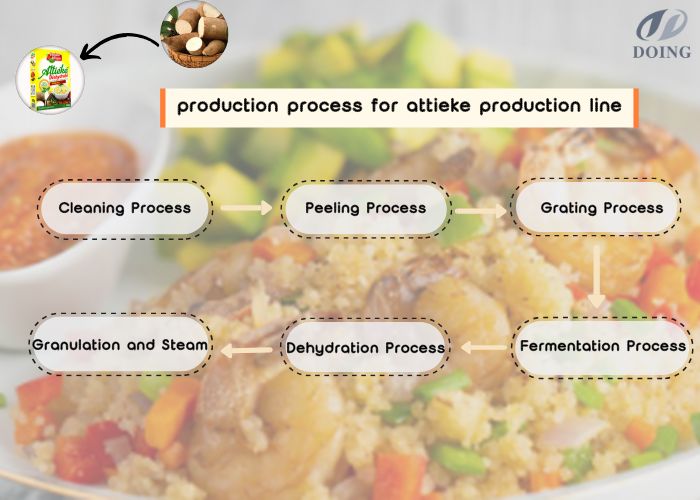
To produce authentic attieke—the granular, fermented cassava staple from Côte d'Ivoire—good raw materials alone are not enough. From fresh cassava tubers to the final light, slightly tangy product, the process involves seven key stages: cleaning, peeling, crushing, fermentation, dewatering, granulating, and steaming. Each stage requires specific equipment. If you choose the wrong machine or mix up the sequence, the final product may turn out bitter, sticky, or have a very short shelf life.
Therefore, understanding exactly what equipment is needed for attieke processing is the first step toward building an efficient and stable production line. Below, Henan Jinrui provides a complete equipment list for small to medium-scale processors, following the correct attieke production process.
 Attieke processing machine
1. Cleaning Equipment – Cassava Washing Machine
For any cassava attieke processing line, the first step is removing dirt, sand, and field debris. A cassava washing machine (paddle or brush type) uses water and gentle agitation to clean cassava tubers thoroughly without damaging the skin.
When choosing cleaning equipment for attieke production, look for hygienic, water-efficient designs. Henan Jinrui’s washing machines, for example, feature food-grade stainless steel and high-pressure spray nozzles, ensuring clean tubers with low water consumption.
2. Peeling Equipment – Cassava Peeling Machine
After washing, the outer skin must be removed to eliminate bitter compounds and impurities. A cassava peeling machine (manual or automatic) uses abrasive rollers or rotating blades to peel tubers quickly and uniformly.
For consistent peeling quality and lower labor costs, Henan Jinrui offers automatic cassava peelers with adjustable peeling depth—reducing manual work by up to 70% while keeping 96% high peeling rate.
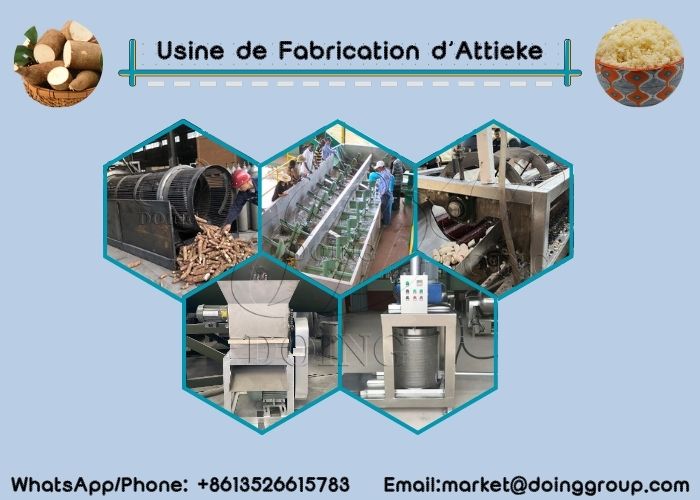 Attieke processing equipment
3. Crushing Equipment – Cassava Grater
Peeled cassava is then crushed into a fine, uniform pulp. A high-speed cassava grater with sharp stainless steel blades ensures a smooth mash—critical for even fermentation and the final texture of attieke.
Henan Jinrui’s grinding machines deliver adjustable particle sizes and high throughput (1–5 tons per hour), with easy blade replacement for long-lasting performance. This makes them a reliable choice for the crushing stage in cassava attieke processing equipment.
4. Fermentation Equipment – Fermentation Tank
The crushed pulp is fermented to develop attieke’s distinctive tangy flavor and reduce cyanogenic compounds. A fermentation tank with temperature control (25–30°C) and pH monitoring ensures consistent, food-safe fermentation. This piece of attieke processing equipment directly impacts the final taste and safety.
For large-scale or repeatable results, quality fermentation tanks are essential. Henan Jinrui provides 304 stainless steel tanks with insulation jackets and optional automatic stirring—designed specifically for fermented cassava products like attieke. Choosing the right fermentation tank for attieke processing helps you achieve uniform acidity and stable quality batch after batch.
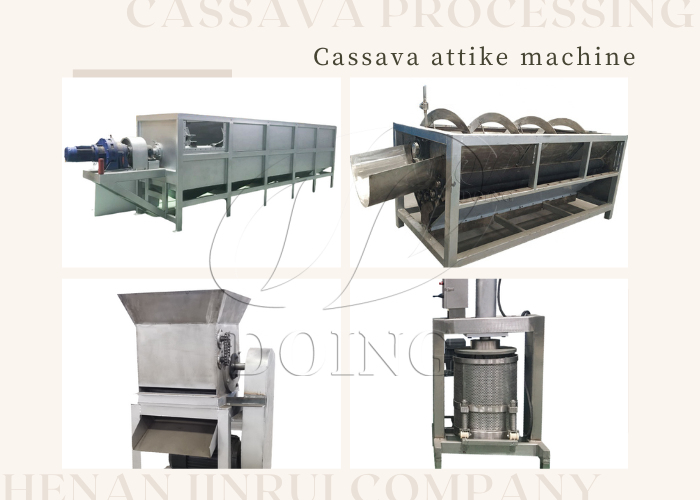 Cassava attieke making machine
5. Dewatering Equipment – Hydraulic Press
After fermentation, excess moisture must be removed to reach 40% moisture content. A hydraulic press efficiently squeezes out water, preventing mold and preparing the pulp for granulation.
Henan Jinrui’s dewatering equipment achieves rapid moisture reduction (up to 500 kg per batch), with easy-to-clean filters and low energy consumption—helping you maintain consistent product quality. When selecting dewatering machines for attieke production, look for high pressure and even pressing to avoid uneven moisture levels.
6. Granulating Equipment – Attieke Granulator
The dewatered pulp is now transformed into small, uniform granules—the signature couscous-like form of attieke. A cassava granulator uses rotating rollers or extrusion plates to shape the wet mash into consistent pellets. This step is critical for achieving the right particle size and texture.
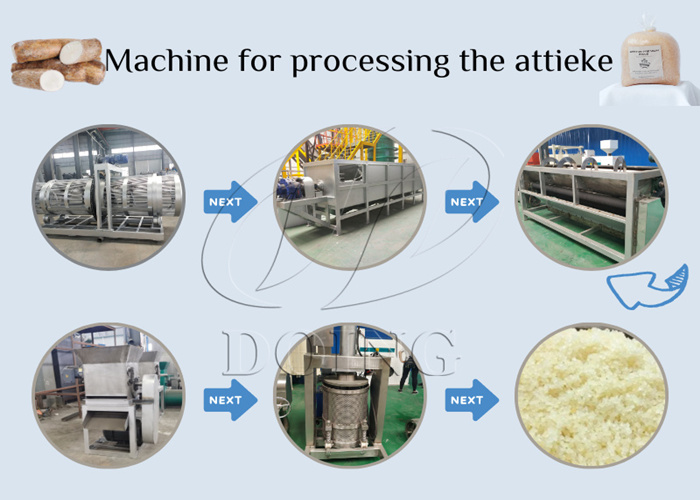 Cassava processing machine for attieke production
7. Steaming Equipment – Steamer or Steam Cooker
Finally, the granules must be fully cooked to gelatinize starch and achieve the typical attieke texture. A steamer (steam jacketed kettle or continuous steaming cabinet) uses pressurized steam to cook attieke evenly without burning. This is the last stage in the attieke processing equipment lineup, and it directly determines the product’s doneness and mouthfeel.
For the core cassava procesisng equipment that determines your attieke production line’s efficiency and product quality—washing, peeling, crushing, fermentation, dewatering, granulating, and steaming—Henan Jinrui delivers proven, food-grade attieke processing equipment solutions. Our machines are built with stainless steel, designed for energy savings, and backed by full technical support (installation, training, after-sales service).
Ready to build or upgrade your attieke processing line? Contact Henan Jinrui today for a customized solution, competitive quote, and expert support.
Leave A Message
- Do you want to buy machine?
- Yes, I want to buy machine
- No, I want to learn more in advance.
- What is your raw material?
- Cassava
- Potato
- Sweet potato
- Other:
- What is the final product you want to produce?
- Chips
- Flour
- Starch
- What is the final product you want to produce?
- Garri
- Cassava flour
- Cassava starch
- Cassava chips
- Attiekie
- Bammy
- Other:
- What is your planned capacity for final product?
- <1 ton per day
- 1 ton per day
- 2 tons per day
- 3 tons per day
- 3-10 tons per da
- 10-20 tons per day
- >20 tons per day
- What is the usage of your cassava chips?
- Food usage (like fried chips, flour)
- Industrial usage (like animal feeds, ethanol)
- What is your planned capacity for final product?
- <5 ton per hour
- 5-10 tons per hour
- >10 tons per hour
- What is your planned capacity for final product?
- <500 kg per hour
- 0.5-5 ton per hour
- 5-10 ton per hour
- >10 ton per hour
- What is your planned capacity for final product?
- <300 kg per hour
- 300-1000 kg per hour
- 1-5 ton per hour
- 5-10 ton per hour
- >10 ton per hour