Tired of Local Hydraulic Jack Presses? Try Henan Jinrui Cassava Dewatering Machine
FAQ/ Chat online/ Leave a message/ May 13, 2026
In garri and cassava flour production, dewatering is a critical step that directly affects product quality, energy consumption, and overall efficiency. Many small and medium-scale processors in Nigeria use locally fabricated hydraulic jack presses. These presses serve a basic function and are widely available. However, some users have reported limitations in terms of pressure stability, maintenance requirements, and consistency of results.
If you are looking for a more efficient, hygienic, and easy-to-maintain solution, Henan Jinrui offers a dedicated cassava dewatering machine designed to overcome these common challenges. This article compares local hydraulic jack press with Henan Jinrui cassava dewatering machine to help you decide which is better for your garri line
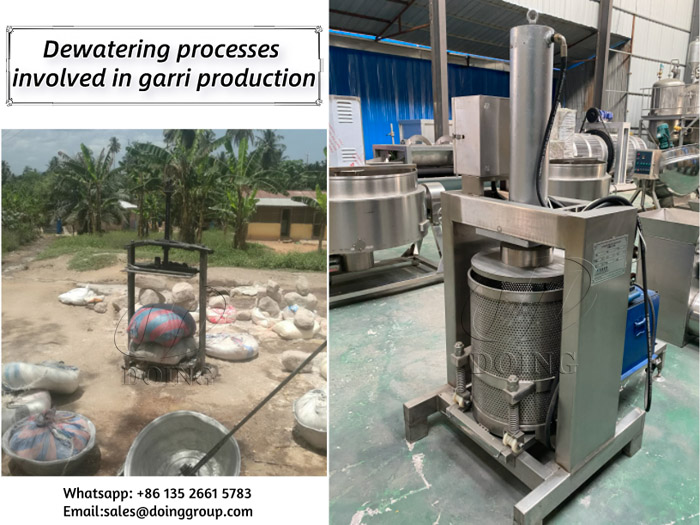 Comparison of local cassava presser and hydraulic press
Local Hydraulic Jack Presses: What Are Their Limitations?
Local hydraulic jack presses are often built with available materials and simple designs. They can work for basic dewatering needs. However, based on feedback from our customers in Nigeria, the following issues are sometimes encountered:
Inconsistent pressure output – Manual hydraulic jacks may not maintain stable pressure, leading to uneven moisture content in the dewatered mash.
High maintenance frequency – Seals, valves, and jacks may wear out quickly, requiring frequent repairs or replacements.
Messy working conditions – Many local presses lack proper wastewater collection, causing wet floors and unhygienic environments.
Limited dewatering effect – Final moisture content often remains above 45–50%, increasing fuel or energy costs during the roasting (garri) stage.
These are common challenges reported by many processors. If you are looking for higher efficiency, lower operating costs, and a cleaner workshop, upgrading to a professional cassava dewatering machine is worth considering.
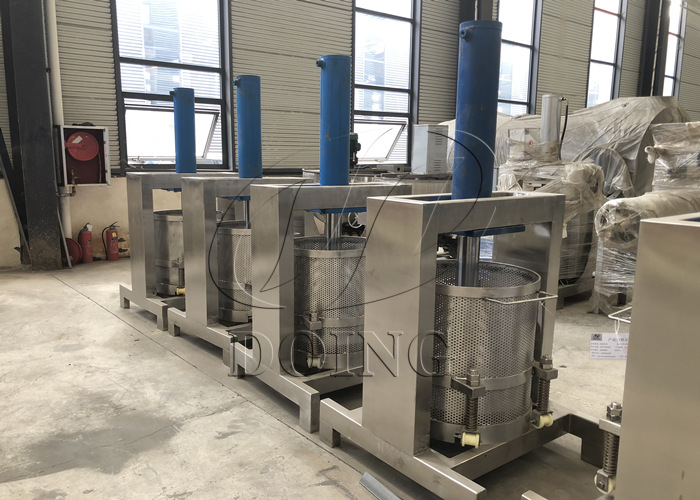 Henan Jinrui hydraulic press
Introducing Henan Jinrui Cassava Dewatering Machine
Henan Jinrui Food Engineering Co., Ltd. has developed a hydraulic dewatering machine specifically for cassava dewatering. It addresses the common pain points of local jack presses while adding multiple value-adding features.
Available Models
| Model (Barrel Diameter) | Capacity (kg/hour) |
| 550 mm | 300–400 |
| 650 mm | 400–500 |
The cassava dewatering machine features an inner and outer barrel design. The outer barrel collects wastewater, keeping your workshop clean and dry. It can also be removed when not needed.
Key Advantages Over Local Jack Presses
1. High and Stable Pressure
Unlike pneumatic or manual jack systems, the hydraulic cylinder of Henan Jinrui cassava dewatering machine generates up to 50 tons of pressure with excellent stability. This reduces the moisture content of cassava mash to only 38%–40%. Lower moisture means significant energy savings during the garri roasting stage – a direct reduction in your operating costs.
2. Simple and Effortless Operation
The cassava dewatering machine comes with slide rails on both sides at the bottom, making it easy to push and pull the barrel. Loading and unloading require minimal physical effort, reducing worker fatigue.
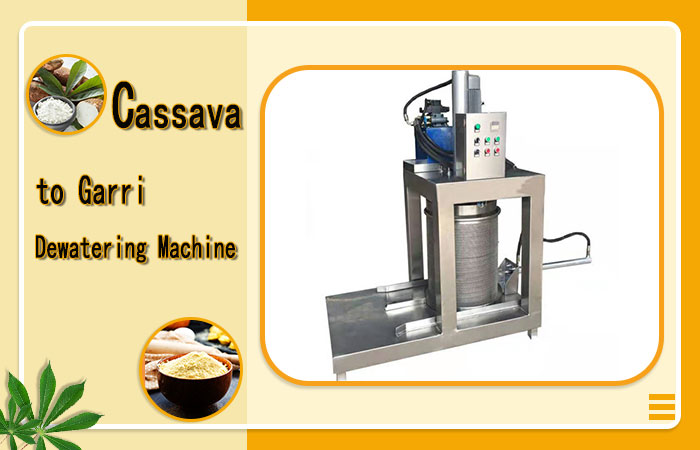 Hydraulic press
3. Easy Maintenance
Standard commercial casters are used for easy replacement. Each cassava dewatering machine comes with common spare parts (O-ring seals, solenoid valve coils) and a detailed operation manual. Your local workers can replace these parts themselves without waiting for a technician.
4. Clean and Hygienic Design
A collection tray at the bottom captures starch water during dewatering, preventing spills on the floor. More importantly, this starch water can be settled and dried to obtain pure cassava starch.
5. Food-Grade Materials
All parts of hydraulic press that come into contact with cassava mash are made of food-grade 304 stainless steel, ensuring the final product meets food safety standards.
Henan Jinrui cassava dewatering machines have been successfully installed in multiple countries, including Jamaica, Nigeria, Ghana, Tanzania, DR Congo, Cameroon, Madagascar, Côte d'Ivoire, and Benin—primarily as part of complete garri and cassava flour production lines. Customers across these regions report improved dewatering consistency, lower energy costs, and cleaner working environments.
If your current hydraulic jack press causes inconsistent moisture, high energy use, or messy floors, consider the Henan Jinrui cassava dewatering solution. It delivers up to 50 tons of stable pressure, 38–40% final moisture, clean hygienic operation, easy maintenance with spare parts included, and food-grade 304 stainless steel. Contact Hen
Leave A Message
- Do you want to buy machine?
- Yes, I want to buy machine
- No, I want to learn more in advance.
- What is your raw material?
- Cassava
- Potato
- Sweet potato
- Other:
- What is the final product you want to produce?
- Chips
- Flour
- Starch
- What is the final product you want to produce?
- Garri
- Cassava flour
- Cassava starch
- Cassava chips
- Attiekie
- Bammy
- Other:
- What is your planned capacity for final product?
- <1 ton per day
- 1 ton per day
- 2 tons per day
- 3 tons per day
- 3-10 tons per da
- 10-20 tons per day
- >20 tons per day
- What is the usage of your cassava chips?
- Food usage (like fried chips, flour)
- Industrial usage (like animal feeds, ethanol)
- What is your planned capacity for final product?
- <5 ton per hour
- 5-10 tons per hour
- >10 tons per hour
- What is your planned capacity for final product?
- <500 kg per hour
- 0.5-5 ton per hour
- 5-10 ton per hour
- >10 ton per hour
- What is your planned capacity for final product?
- <300 kg per hour
- 300-1000 kg per hour
- 1-5 ton per hour
- 5-10 ton per hour
- >10 ton per hour