Investment in Farine de Manioc: How to Profit from Côte d’ Ivoire’ s Wheat Substitution Policy
FAQ/ Chat online/ Leave a message/ August 21, 2026
Every year, Côte d’Ivoire imports nearly 880,000 tons of wheat it does not grow itself — a dependence that has left bread prices hostage to global grain markets. The government’s answer, under the West African Agricultural Productivity Program (WAAPP), is now official policy: every bakery must use at least 15% locally produced farine de manioc (cassava flour) in its bread. That single mandate is turning farine de manioc processing from a niche trade into one of the country’s most policy-backed investment opportunities.
In this article, Henan Jinrui breaks down what the 15% mandate means in practice: the size of the demand it creates, why existing supply of refined farine de manioc cannot yet meet it, and the practical steps to build a profitable farine de manioc business in Côte d’Ivoire.
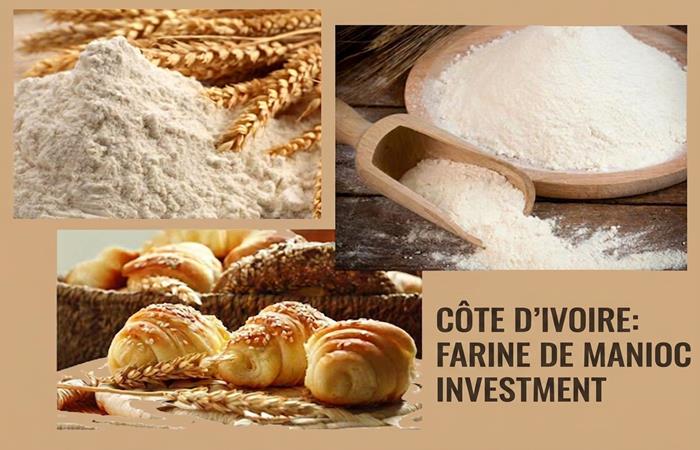 Farine de manioc investment
Why Farine de Manioc Processing in Côte d’Ivoire Is Profitable
What makes this business profitable? Two things: a market that will actually buy your farine de manioc, and a government policy that keeps that market growing. Côte d’Ivoire has both — here is the proof.
1. Strong Demand: Farine de Manioc Will Not Lack Buyers
A substitution mandate only works if the demand is there — and in Côte d’Ivoire, it clearly is. Bread is a daily staple: more than 2,000 bakeries nationwide bake large volumes every single day, and they all need a constant, reliable supply of flour. On top of that everyday demand, the 15% mandate turns every bakery into a farine de manioc customer by law.
Yet refined farine de manioc that meets bakery standards is in severe shortage — traditional sun-drying cannot deliver the consistent quality bakeries need. That gap is the early-mover opportunity: your customers are already there, almost no one can serve them yet, and the first mills in can charge a good price. Every part of the chain already exists except the processing link — and that is exactly where the money is.
2. Policy Support: The 15% Substitution Mandate Is Already in Motion
The mandate is not new rhetoric — its rollout is already under way. Drawing on proven technology from Senegal, the government has piloted the 15% farine de manioc requirement in 50 bakeries across Abidjan, Bouaké, and Korhogo, with nationwide expansion planned. The Ivorian National Consumers’ Association has publicly endorsed the initiative, and the policy has been written into the 2026–2030 National Development Plan (PND), with farine de manioc named a core component of national food security — a long-term commitment, not a short-term experiment.
For an investor in farine de manioc, this changes everything: you are not hoping demand will show up — it is guaranteed by law. You can calculate what your mill will sell before you build it, and when you take those numbers to a bank, they add up. Not many business opportunities in West Africa come with this much certainty.
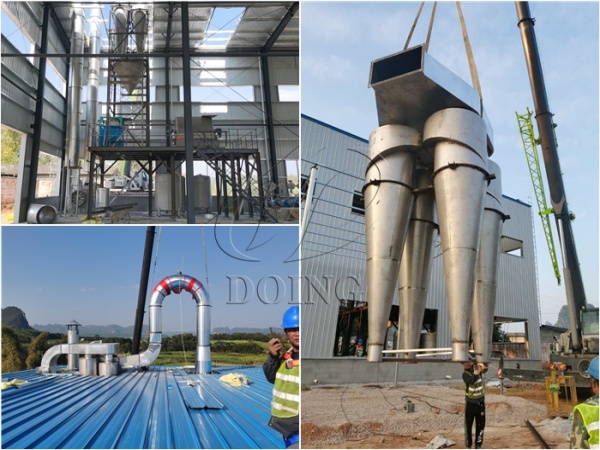
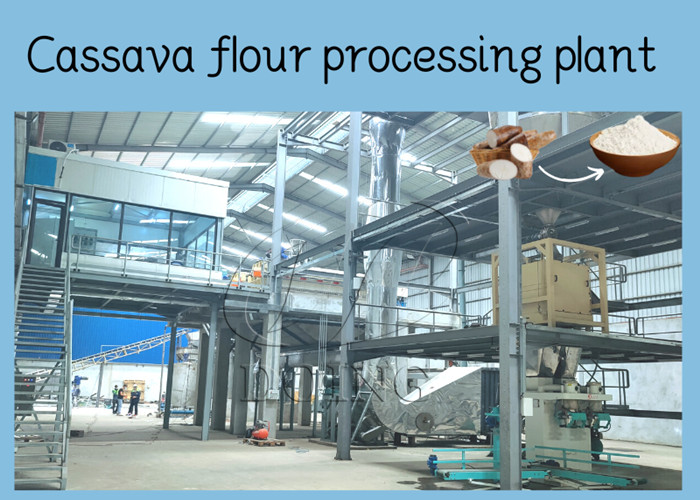 Usine de farine de manioc
How to Seize This Opportunity
Step 1: Choose Your Product Positioning
Farine de manioc processing in Côte d’Ivoire serves two main directions: bakery-grade farine de manioc for bread, and traditional local products such as attiéké. Given the rigid demand created by the 15% mandate, bakery-grade farine de manioc is currently the most stable entry point. With spare capacity, you can diversify into attiéké and other local products.
Step 2: Understand Your Equipment Investment
The core steps of farine de manioc processing are cleaning, peeling, grinding, dewatering, drying, sieving, and packaging. Equipment choice directly determines processing efficiency, product consistency, and whether your farine de manioc can meet bakery-grade standards — no amount of market demand will help if your line cannot deliver reliable quality. Before investing, define your target capacity, verify that the equipment fits local power conditions and raw material characteristics.
Suppliers such as Henan Jinrui Food Engineering Technology Co., Ltd. offer complete farine de manioc processing lines — from small-scale systems processing 1–2 tons per hour for start-ups and cooperatives to larger lines for scaled operations — including process design, installation, commissioning, worker training, and turnkey project delivery.
Step 3: Practical Execution Tips
Four things decide whether your farine de manioc mill survives its first year: where you build, how you feed it, how you get bakery-certified, and how you start.
Site Selection — Build inside the 48-hour harvest radius: fresh cassava roots spoil that fast, so your mill must sit close to the farms — and stay within daily delivery range of Abidjan or other big cities where the bakeries are. Confirm water and power before committing: washing and drying consume both heavily.
Raw Material Security — You cannot stockpile fresh cassava, so run two channels: long-term contracts with growers for high-starch, low-cyanide varieties (8–12 months maturity), and dried cassava chips (cossettes) as year-round buffer stock between harvests.
Local Networks and Compliance — Get certified to bakery specs — fineness, moisture, and color decide whether bakeries will buy your flour — and register as an approved supplier under the 15% mandate. Join OIA Manioc to stay ahead of policy changes.
Start Lean, Scale Fast — Start with a 1–2 t/h line to prove your flour meets bakery standards and win your first contracts, then scale as orders grow. Use spare capacity for attiéké — the national fermented cassava staple — for steady local cash flow while you build the bakery channel.
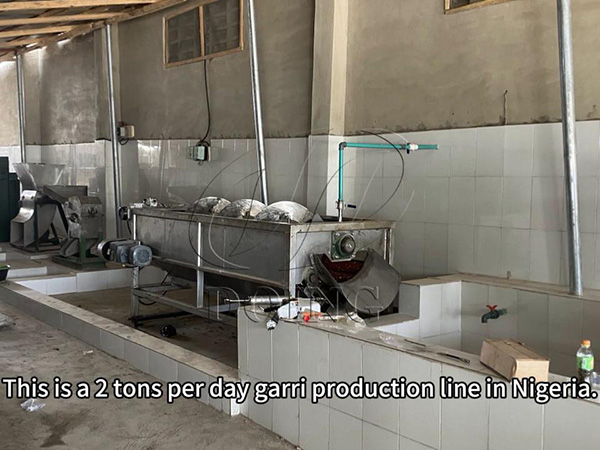
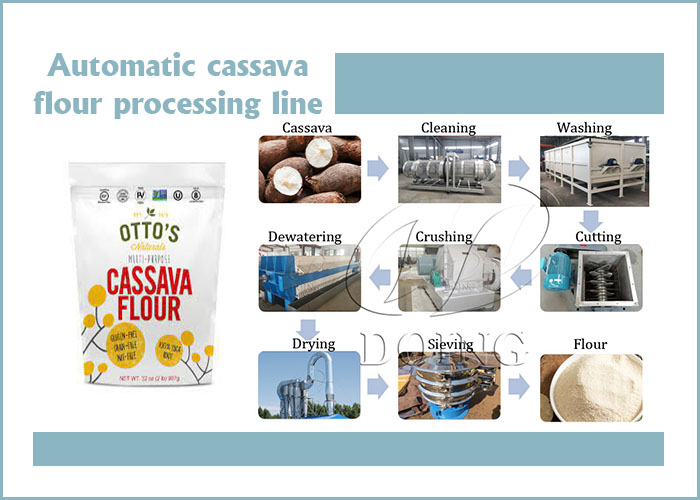 Cassava flour making line
Now Is the Best Time
The 15% substitution mandate is already in motion — piloted in 50 bakeries, embedded in the national development strategy, and set for nationwide rollout. Demand is clear: over 2,000 bakeries consuming at least 130,000 tons of flour annually. Raw materials are ready: 8.4 million tons of cassava production and growing. What is missing is processing capacity — and whoever builds first, supplies first, and locks in customers first.
Henan Jinrui Food Engineering Technology Co., Ltd. is ready to be your technical partner, from production line design and equipment supply to installation, worker training, and plant commissioning. Want a customized farine de manioc processing proposal and quotation? Contact Henan Jinrui today.
FAQ
Q: Why is Côte d’Ivoire substituting farine de manioc for wheat flour?
A: Côte d’Ivoire imports nearly 880,000 tons of wheat it does not grow. Substituting locally produced farine de manioc cuts import dependence, saves foreign exchange, and stabilizes bread prices against global grain swings.
Q: What does the 15% substitution mandate require?
A: Under WAAPP, all bakeries must use at least 15% locally produced farine de manioc in bread. Piloted in 50 bakeries in Abidjan, Bouaké, and Korhogo, backed by the 2026–2030 National Development Plan.
Q: How big is the farine de manioc market in Côte d’Ivoire?
A: With 2,000+ bakeries consuming at least 130,000 tons of flour annually, the 15% mandate alone locks in roughly 20,000 tons of annual farine de manioc demand — growing further as the mandate expands nationwide.
Q: Is bakery-grade farine de manioc the best entry point?
A: Yes. The 15% mandate creates rigid, predictable demand that makes bakery-grade farine de manioc the most stable entry point today. Attiéké is a good complement for diversifying revenue with spare capacity.
Q: What equipment is needed for farine de manioc processing?
A: A complete line covers cleaning, peeling, grinding, dewatering, drying, sieving, and packaging. Starter lines at 1–2 t/h suit new entrants; larger lines serve scaled operations.
Leave A Message
- Do you want to buy machine?
- Yes, I want to buy machine
- No, I want to learn more in advance.
- What is your raw material?
- Cassava
- Potato
- Sweet potato
- Other:
- What is the final product you want to produce?
- Chips
- Flour
- Starch
- What is the final product you want to produce?
- Garri
- Cassava flour
- Cassava starch
- Cassava chips
- Attiekie
- Bammy
- Other:
- What is your planned capacity for final product?
- <1 ton per day
- 1 ton per day
- 2 tons per day
- 3 tons per day
- 3-10 tons per da
- 10-20 tons per day
- >20 tons per day
- What is the usage of your cassava chips?
- Food usage (like fried chips, flour)
- Industrial usage (like animal feeds, ethanol)
- What is your planned capacity for final product?
- <5 ton per hour
- 5-10 tons per hour
- >10 tons per hour
- What is your planned capacity for final product?
- <500 kg per hour
- 0.5-5 ton per hour
- 5-10 ton per hour
- >10 ton per hour
- What is your planned capacity for final product?
- <300 kg per hour
- 300-1000 kg per hour
- 1-5 ton per hour
- 5-10 ton per hour
- >10 ton per hour