How to Fix Low Cassava Starch Yield: Henan Jinrui’s Professional Processing Solutions
FAQ/ Chat online/ Leave a message/ June 5, 2026
If your cassava starch yield is below 20%, you’re losing money with every batch. The difference between 18% and 25% extraction can mean thousands of dollars in lost profit each month. Over a full year, that adds up to a serious hit on your bottom line. But low cassava starch yield isn’t a dead end – it’s a problem you can solve. With the right diagnosis and equipment upgrades, you can recover that lost starch and turn waste into profit. First, Henan Jinrui will help you identify the root causes.
Low cassava starch yield usually comes from one or more of these five common problems. Identifying which ones affect your line is the first step toward a solution.
Poor raw material quality and preparation – Using low starch cassava varieties or processing roots too late after harvest reduces potential yield. Also, unnecessary peeling removes not only skin but also some starch rich outer layer, causing early losses.
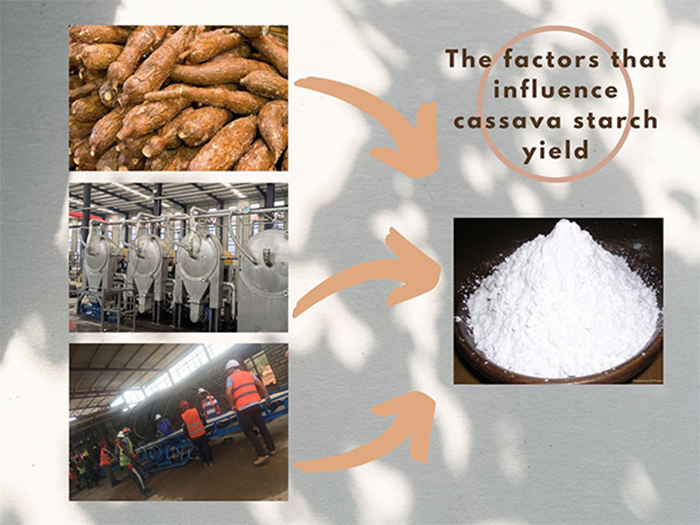 The reasons for low cassava starch yield
Insufficient crushing – If the crushing machine doesn’t break cassava cells thoroughly, starch remains trapped inside the fiber. A crushing rate below 90% means significant starch is never released.
Inefficient fiber separation – When starch and fiber are not separated well, a large amount of starch stays in the fiber and is discarded. This is often the biggest hidden loss in a processing line.
Poor extraction and refining – Low efficiency extraction leaves starch in the wastewater or fails to concentrate the slurry properly, directly reducing final yield.
Material loss during drying – If the drying system does not control airflow and temperature properly, fine starch particles can be carried away. This loss is often invisible but adds up over time.
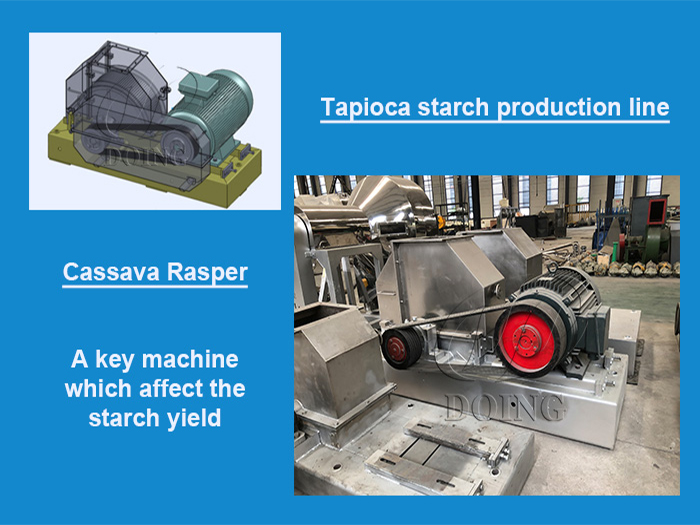 Henan Jinrui high-extraction cassava rasper
Identifying the problem is only half the battle. The real question is: how to fix low cassava starch yield? Here’s how Henan Jinrui addresses each of these issues.
No peeling – keep more cassava starch – Traditional peeling removes the skin but also takes away part of the starch-rich outer layer. Henan Jinrui’s process skips peeling entirely. Subsequent steps fully remove impurities, dirt, and naturally occurring cassava toxins, while preserving the cassava starch. This alone significantly increases your yield.
High efficiency rasping – Henan Jinrui high speed rasper achieves a crushing rate of over 96%, fully breaking down fiber cells and releasing more starch. This is the foundation of a high cassava starch yield line.
Complete fiber separation – Henan Jinrui uses multi-stage centrifugal screens and fine fiber sieves to separate cassava starch from fiber thoroughly. Less cassava starch left in the fiber means more starch in your final product. The centrifugal screen features a high-speed rotating design for high separation efficiency, while the fine fiber sieve captures even smaller fiber particles, ensuring higher purity of the cassava starch slurry. Working together, these two screening stages can reduce starch loss by 5–10%.
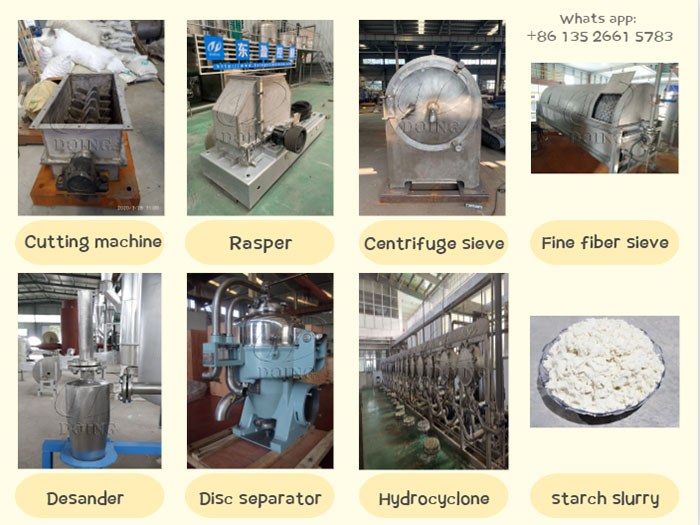 Automatic cassava starch processing machine
Optimized extraction and refining – Henan Jinrui extraction system and multi-stage cyclones concentrate the starch slurry efficiently, recovering cassava starch that would otherwise be lost in wastewater. The cyclones are arranged in an 18-stage series for step-by-step purification, increasing the starch slurry concentration to 22°Bé.
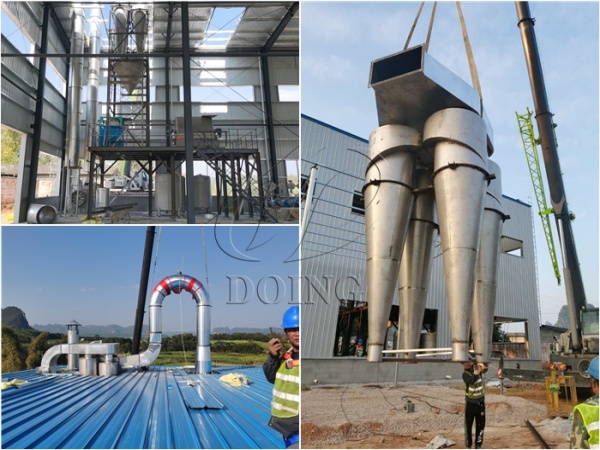
Loss-controlled drying – The flash dryer is designed with precise airflow and temperature control to prevent fine starch particles from being carried away. Every bit of starch you produce stays in your final product. The dryer features a negative pressure design for even heating, with a drying time of just a few seconds. It is also equipped with a two-stage cyclone system to recover fine powder that might otherwise escape, further reducing losses.
With these solutions, you can raise your cassava starch extraction rate to 90–95%, recover lost starch, and turn waste into profit.
Low cassava starch yield doesn’t have to be your reality. Henan Jinrui provides complete solutions – from rasping to drying – to help you extract more from every ton of cassava. Our no peeling process preserves more starch while removing impurities completely. Let’s talk about your line and find the right solution for you.
Leave A Message
- Do you want to buy machine?
- Yes, I want to buy machine
- No, I want to learn more in advance.
- What is your raw material?
- Cassava
- Potato
- Sweet potato
- Other:
- What is the final product you want to produce?
- Chips
- Flour
- Starch
- What is the final product you want to produce?
- Garri
- Cassava flour
- Cassava starch
- Cassava chips
- Attiekie
- Bammy
- Other:
- What is your planned capacity for final product?
- <1 ton per day
- 1 ton per day
- 2 tons per day
- 3 tons per day
- 3-10 tons per da
- 10-20 tons per day
- >20 tons per day
- What is the usage of your cassava chips?
- Food usage (like fried chips, flour)
- Industrial usage (like animal feeds, ethanol)
- What is your planned capacity for final product?
- <5 ton per hour
- 5-10 tons per hour
- >10 tons per hour
- What is your planned capacity for final product?
- <500 kg per hour
- 0.5-5 ton per hour
- 5-10 ton per hour
- >10 ton per hour
- What is your planned capacity for final product?
- <300 kg per hour
- 300-1000 kg per hour
- 1-5 ton per hour
- 5-10 ton per hour
- >10 ton per hour