Why Poor Garri Processing Ruins Export Opportunities – And How to Fix It
FAQ/ Chat online/ Leave a message/ June 12, 2026
Garri is the most common byproduct of cassava processing. Its market is not limited to Nigeria alone – it also holds significant potential in the broader export market. However, due to poor processing methods, international buyers repeatedly reject your products, forcing you to sell only at low prices in local markets. Traditional manual processing – open frying, uneven fermentation, and lack of quality control – prevents the product from meeting global food safety and consistency standards.
In this article, Henan Jinrui explains how poor garri processing destroys export opportunities and how Henan Jinrui's modern garri processing equipment can help you solve this problem.
Why Poor Garri Processing Ruins Export Opportunities
Traditional manual garri processing creates four fatal problems that block you from export markets.
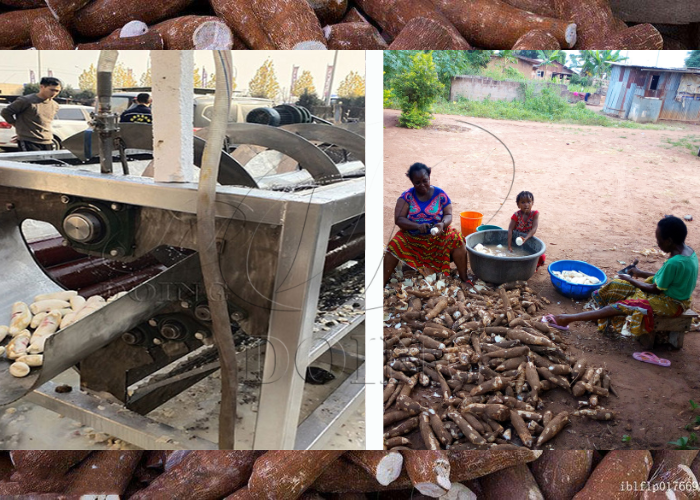 Manual garri making
1. Inconsistent product quality
Manual garri processing methods lead to varying moisture content, uneven particle size, and unstable color and taste. International buyers demand fixed specifications. One inconsistent batch can cost you a long‑term export contract.
2. Poor hygiene and food safety risks
Traditional garri processing happens in open, dusty workshops. Manual peeling and washing leave dirt and impurities. There is no closed environment or sterilization. Overseas food safety authorities test for microbes and contaminants. A single failed inspection can blacklist your entire factory.
3. Low production efficiency and unstable supply
Manual processing is slow and labor-intensive. Cassava waste is high – often 15 to 20 percent. You cannot handle large, continuous export orders. Exporters need reliable volume, and traditional garri processing methods cannot guarantee it.
4. Lack of export certifications and traceability
Without production records, quality testing at each stage, or traceability from raw material to finished product, you cannot obtain HACCP, ISO, or other international certifications. Your garri stays in informal local markets and never reaches international supermarkets or food chains.
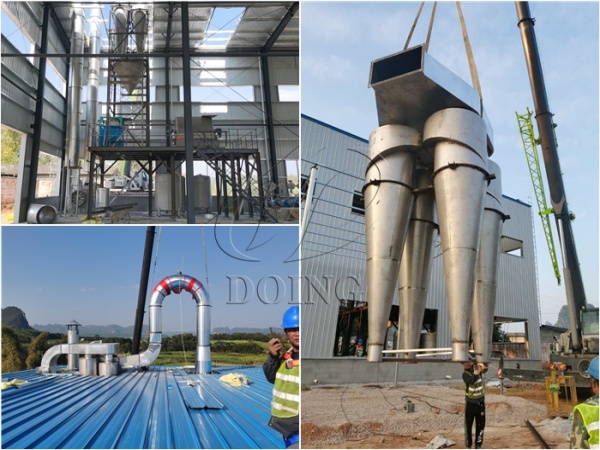
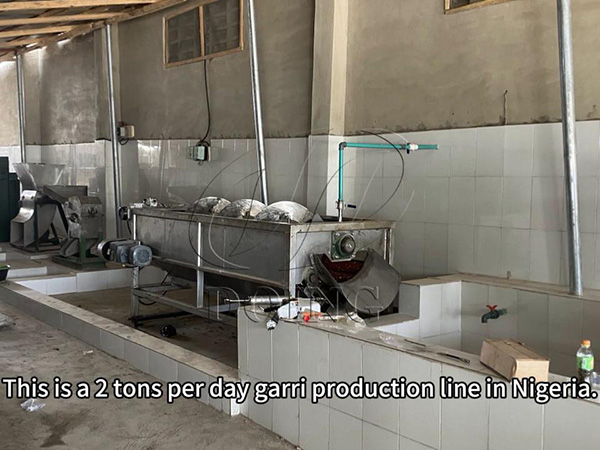
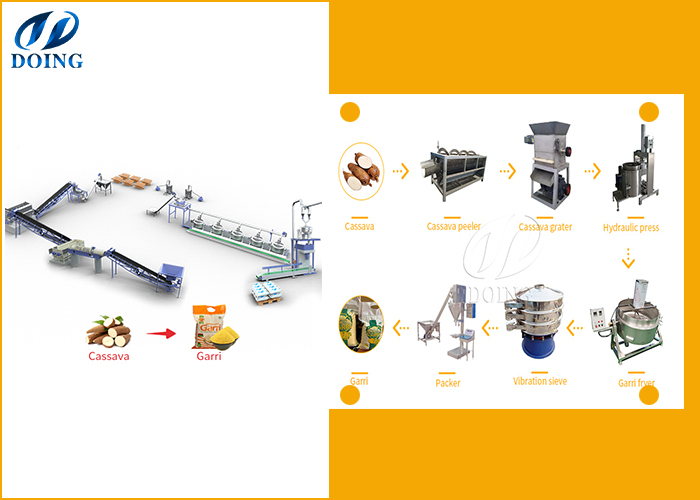 Garri processing equipment
From Manual to Automated Garri Processing: The Only Way to Export
The four problems above cannot be solved by patching manual methods. The only practical path to export markets is to replace traditional processing with modern, automated garri processing equipment.
Here is how such equipment – for example, Henan Jinrui's complete garri processing line – directly addresses each problem.
1. Consistent product quality – every batch
Henan Jinrui's automated garri line includes a temperature-controlled fryer, and standardized sieving. This ensures fixed moisture content, uniform particle size, and consistent golden color and taste. No more rejected batches.
2. Hygiene and food safety – fully enclosed
Our garri processing equipment is made of stainless steel and operates in a closed, dust‑free environment. Automated washing and peeling remove dirt and reduce cyanide. Enclosed frying and sieving prevent exposure to insects and contaminants. Your garri can pass international food safety inspections.
3. High efficiency and stable supply – continuous production
A complete Henan Jinrui line runs continuously from peeling to packaging. It is up to ten times faster than manual garri processing, with cassava waste reduced to below 5%. You can now handle large, regular export orders and build reliable supply for overseas buyers.
4. Export certifications and traceability – built-in
Our garri equipment comes with a PLC system that records all production parameters. You can perform quality checks at each stage and maintain full traceability from raw material to finished product. This directly supports your applications for HACCP, ISO, and other export-required certifications.
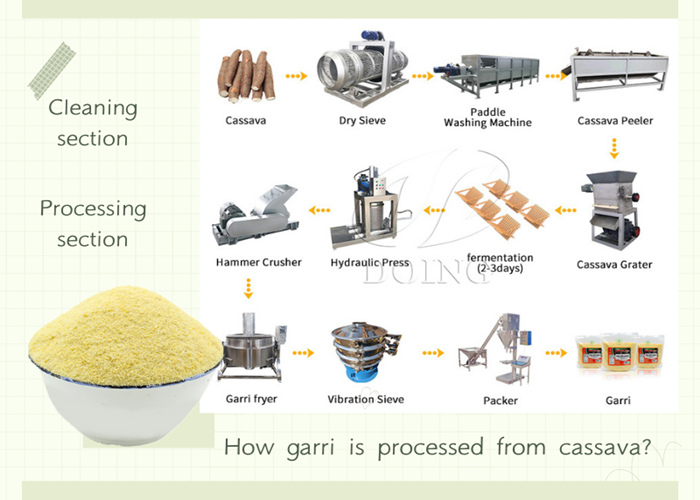 Machine for garri processing
What a Modern Garri Processing Line Includes
The table below shows the core machines in a typical automated garri processing line from Henan Jinrui and how each contributes to export-ready garri.
| Equipment | Function | How It Helps Export Quality |
| Cassava peeler | Removes skin mechanically with over 90% efficiency | Reduces manual labor, ensures cleaner raw material, lowers cyanide |
| Grater / crusher | Reduces peeled cassava to uniform fine mash | Creates consistent particle size for even fermentation and frying |
| Hydraulic press | Dewaters fermented mash to reduce moisture | Prepares mash for efficient frying, lowers energy use |
| Garri fryer | Fries dewatered mash with precise temperature control | Delivers uniform golden color, no burnt or undercooked batches |
| Sieving & packaging machine | Screens fried garri to uniform granules and seals in moisture-proof bags | Meets international packaging standards, extends shelf life |
Poor garri processing is not a dead end. By replacing manual, outdated methods with a modern automated garri processing line, you can overcome inconsistent quality, hygiene risks, low efficiency, and lack of certification – and finally enter the high-value export market.
Henan Jinrui provides complete, scalable garri processing solutions. Whether you produce 0.5 tons or 20 tons per day, we have the right equipment to help your garri pass international inspections and win long-term buyers. Contact Henan Jinrui today – tell us your daily output and target market – and we will recommend the equipment solution that fits your business.
Leave A Message
- Do you want to buy machine?
- Yes, I want to buy machine
- No, I want to learn more in advance.
- What is your raw material?
- Cassava
- Potato
- Sweet potato
- Other:
- What is the final product you want to produce?
- Chips
- Flour
- Starch
- What is the final product you want to produce?
- Garri
- Cassava flour
- Cassava starch
- Cassava chips
- Attiekie
- Bammy
- Other:
- What is your planned capacity for final product?
- <1 ton per day
- 1 ton per day
- 2 tons per day
- 3 tons per day
- 3-10 tons per da
- 10-20 tons per day
- >20 tons per day
- What is the usage of your cassava chips?
- Food usage (like fried chips, flour)
- Industrial usage (like animal feeds, ethanol)
- What is your planned capacity for final product?
- <5 ton per hour
- 5-10 tons per hour
- >10 tons per hour
- What is your planned capacity for final product?
- <500 kg per hour
- 0.5-5 ton per hour
- 5-10 ton per hour
- >10 ton per hour
- What is your planned capacity for final product?
- <300 kg per hour
- 300-1000 kg per hour
- 1-5 ton per hour
- 5-10 ton per hour
- >10 ton per hour