Garri Making in Ghana: 5 Operational Units to Double Your Profit from Peeling to Frying
FAQ/ Chat online/ Leave a message/ June 17, 2026
Most Ghanaian garri processors lose nearly one-third of their cassava before frying, burn extra fuel with open pans, and sell at lower prices because of uneven granules. The difference between breaking even and doubling your profit is not a bigger factory – it is a smarter workflow. By separating garri making into five specialized operational units, you can cut post-harvest loss by 30%, reduce fuel use by 40%, and command premium market prices.
Below, Henan Jinrui will introduce how each unit works, what equipment to use, and the profit gain you can expect per stage.
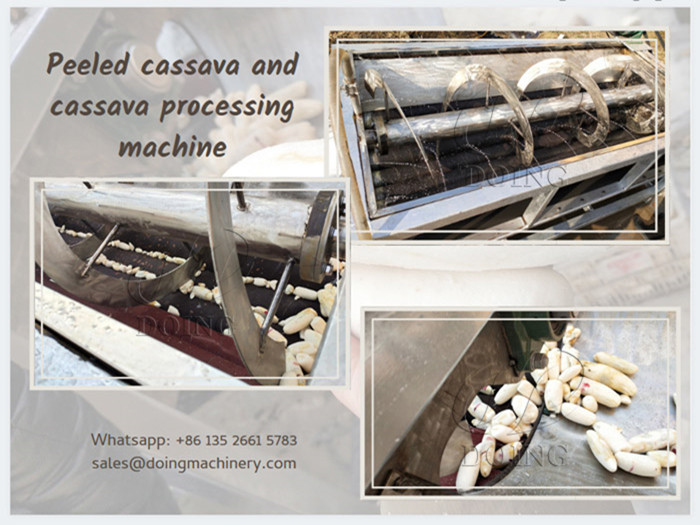 Cassava washing and peeling machine
1. Washing and Peeling Unit
Fresh cassava spoils within 48 hours, and dirt causes dark garri with a short shelf life. A simple washing station with clean water removes over 90% of grit, while a mechanical peeler pushes throughput from 50 kg to 500 kg per hour. In Ghanaian conditions, pairing with a stainless steel soaking tank helps reduce browning in high-cyanide varieties, giving you brighter garri and less waste at the outset.
2. Grating Unit
Hand grating or worn plates produce uneven particles that over-ferment or burn during frying – mixed sizes sell for 2 to 3 cedis less. A motorized cassava grater with sharp stainless steel plates gives you a consistent fine mash in seconds, processing over 500 kg per hour. Uniform garri granules directly command higher prices in Accra markets (8–10 cedis versus 5–6 for coarse batches), making this garri processing equipment one of the fastest-paying investments.
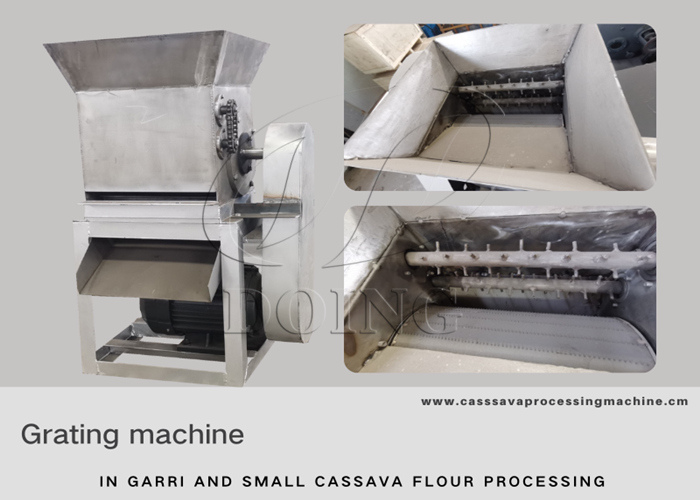 Cassava grating machine
3. Fermentation and Dewatering Unit
After grating, the cassava mash is first left to ferment for 24 to 48 hours, depending on ambient temperature – this develops the signature tangy flavor that Ghanaians expect, without the excessive sourness that leads to market rejection. Once fermentation is complete, the mash is ready for dewatering. Traditional bag-and-stone pressing takes up to five hours and invites bacterial contamination, but a hydraulic press cuts this step to just 15 minutes, producing a uniformly dried cake. Consistent dewatering lowers labor costs without losing that authentic garri taste. That’s time saved and quality preserved.
4. Frying Unit
Open-pan frying burns excess fuel and easily scorches the batch. A mechanized garri fryer with temperature control (80–100°C) is available in electric, gas, or diesel versions – so you can choose the energy source that works best for your location. Compared to traditional open pans, Henan Jinrui garri fryer cuts fuel use by up to 40%. For a small processor using charcoal, that means dropping from five bags to three per batch, saving roughly 150 cedis weekly. Even heat produces the crispy, shelf-stable garri that wholesalers in Kumasi and Accra actively seek. Many Ghanaian processors start with the garri fryer because the fuel savings alone recover the cost within four months.
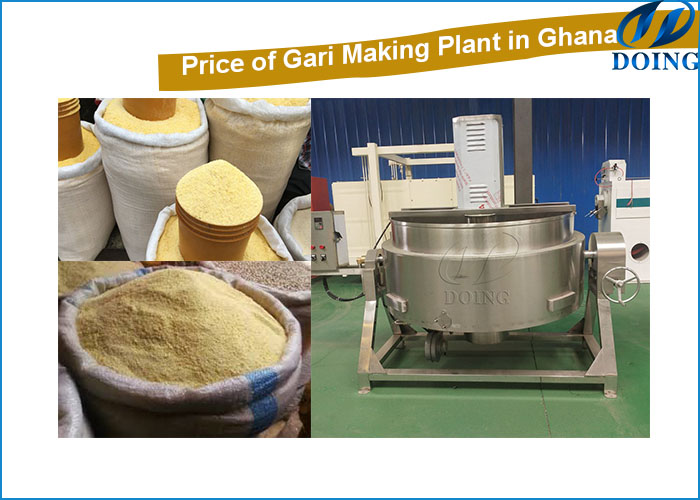 Garri fryer
5. Sieving Unit
Mixed granules look unprofessional and rehydrate unevenly. A rotary sifter running at 200–300 rpm processes up to 500 kg per hour, separating fine from coarse in one pass. Fine, uniform garri fetches a clear premium because it hydrates faster and has better mouthfeel for eba – often selling for significantly more than unsieved batches in local markets. This final grading step transforms a good product into a premium garri.
Separating garri making into five specialized units is not about buying a whole factory at once. It is about solving your biggest bottleneck first – whether that is fuel waste, uneven granules, or slow dewatering. Henan Jinrui’s garri equipment has helped Ghanaian processors cut post-harvest loss by 30%, reduce fuel use by 40%, and earn premium prices for uniform, crispy garri. That is how you double your garri profit. Henan Jinrui provides the reliable garri equipment you need – from washing and peeling to sieving – designed for Ghanaian conditions. Start with one unit, and let the profit speak for itself!
Leave A Message
- Do you want to buy machine?
- Yes, I want to buy machine
- No, I want to learn more in advance.
- What is your raw material?
- Cassava
- Potato
- Sweet potato
- Other:
- What is the final product you want to produce?
- Chips
- Flour
- Starch
- What is the final product you want to produce?
- Garri
- Cassava flour
- Cassava starch
- Cassava chips
- Attiekie
- Bammy
- Other:
- What is your planned capacity for final product?
- <1 ton per day
- 1 ton per day
- 2 tons per day
- 3 tons per day
- 3-10 tons per da
- 10-20 tons per day
- >20 tons per day
- What is the usage of your cassava chips?
- Food usage (like fried chips, flour)
- Industrial usage (like animal feeds, ethanol)
- What is your planned capacity for final product?
- <5 ton per hour
- 5-10 tons per hour
- >10 tons per hour
- What is your planned capacity for final product?
- <500 kg per hour
- 0.5-5 ton per hour
- 5-10 ton per hour
- >10 ton per hour
- What is your planned capacity for final product?
- <300 kg per hour
- 300-1000 kg per hour
- 1-5 ton per hour
- 5-10 ton per hour
- >10 ton per hour