How to Start a Small-Scale Garri Processing Facility in Ghana?
FAQ/ Chat online/ Leave a message/ April 1, 2026
It is very wise to start a Small-Scale Garri Processing Facility in Ghana, because there is robust market demand for garri, and from small-scale, you can start it more easily. Then, what you shold do? Below is a step-by-step guide supplied by Henan Jinrui, to help you navigate the key considerations.
Step 1. Do A Research and Plan Your Budget & Secure Funding
Before starting your small-scale garri processing facility in Ghana, doing a research is essential. You should know what you need prepare, such as the selections of project site , raw material supplier, equipment manufacturer, product quality requirement, product selling market, etc. Besides, the most important is to caculate the capital you required and plan to how to raise it.
What costs should you expect?
■ Equipment purchase — Peeling, grating, dewatering, frying, and sieving machines
■ Facility costs — Workshop construction or rental
■ Labor costs — Salaries for trained workers
■ Operating capital — Raw materials, utilities, packaging, and marketing
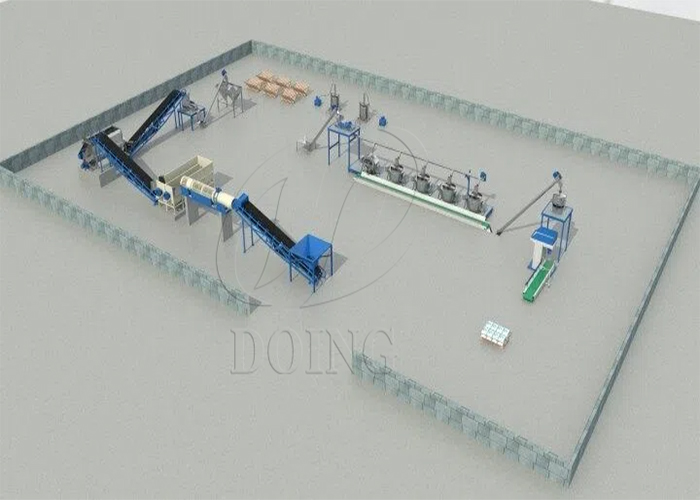 Garri 3D process flow
Step 2. Choose a Suitable Location
Select a right location for your small-scale garri processing facility, as it may influence your production efficiency and profitability. Henan Jinrui suggests you to confirm the following points:
1.When evaluating potential sites, please confirm access to water and reliable electricity, as garri processing requires them.
2.Locate near cassava farms to reduce transportation costs and ensure fresh roots for higher-quality output.
3.Ensure roads to your target markets are accessible year-round for smooth distribution.
4.Finally, choose a site with adequate land space for production, storage, and future expansion.
Please take some times to evaluate these factors. It will help your small-scale garri processing facility operate efficiently in Ghana from the start.
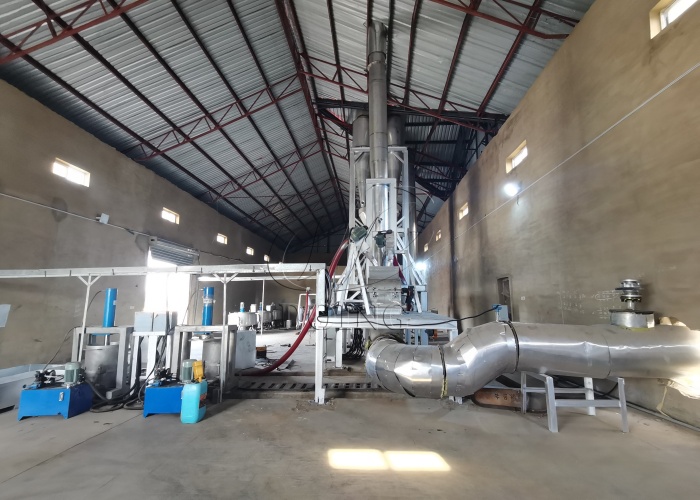 Garri production plant diagram
Step 3. Secure a Reliable Raw Material Supply
A stable supply of raw materials ensures stable operations and a steady income for your small-scale garri processing facility in the future. So Henan Jinrui wants to tell you: If you have your own cassava plantation, it will be best for full control over quality and harvest timing. Or you can also partner with local farmers to secure steady supply at predictable prices.
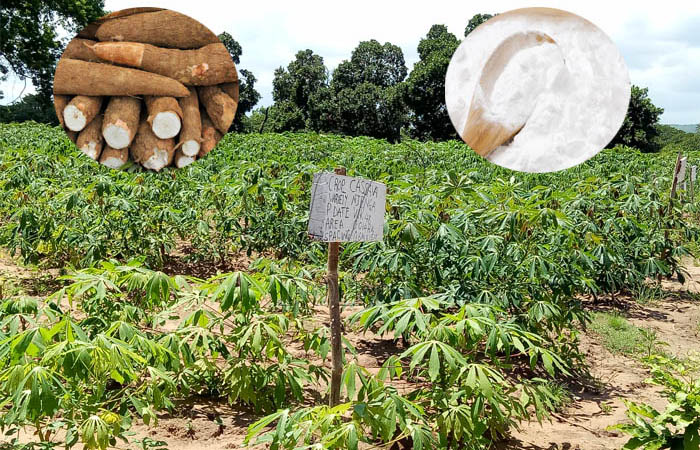 Cassava plantation
Step 4. Purchase Small-scale Garri Processing Equipment
When you plan to purchase small-scale garri processing equipment, you had better figure out your requirement, such as your target production capacity, your final products quality requirement, your local power supply situation, or your budget.
Henan Jinrui's small-scale garri processing facility typically includes the following core equipment:
■ Dewatering machine (such as a hydraulic press)
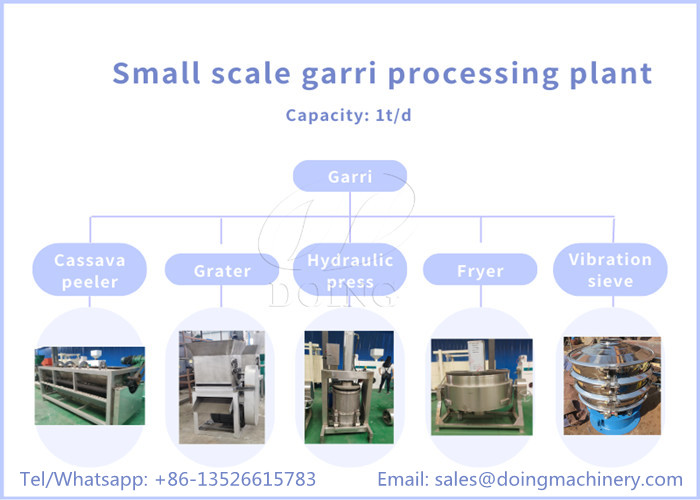 Small scale garri processing plant
About garri fryers, Henan Jinrui offers three options: gas, oil, or electric. You can choose the most suitable one based on local energy prices. If you want a more automated garri procesing facility, Henan Jinrui also provides customized solutions based on your specific production needs and facility layout.
Step 5. Hire and Train Workers
A successful and profitable garri processing facility cannot operate without skilled workers and sound management systems. If you start with small-scale, Henan Jinrui suggests you need to hire machine operators, general workers, and a supervisor. At the same time, develop a detailed employee sound management systems to ensure the factory running well.
About the worker training, Henan Jinrui will provide you with operation training guidance, and after-sales support to help you maximize equipment performance and consistently produce high-quality garri.
Step 6. Establish a Quality Control System
Product quality is the foundation of customer trust. In Ghana, garri is one of main food product, but its quality is still inconsistent. So establishing a quality control system will help you boost your garri brand awareness and increase local customers' trust in Ghana.
Henan Jinrui small-scale garri prcoessing facility can help you maintain consistent quality across all production stages—from raw material selection to fermentation, frying, and sieving. Control fermentation time and temperature for optimal flavor, and use a sieving machine to ensure uniform particle size.
If you are ready to start your garri processing journey in Ghana, Henan Jinrui is here to help. Our team will work with you to understand your needs and recommend the most suitable solution—whether you need some small scale key equipment or a complete production line. Feel free to contact us!
Leave A Message
- Do you want to buy machine?
- Yes, I want to buy machine
- No, I want to learn more in advance.
- What is your raw material?
- Cassava
- Potato
- Sweet potato
- Other:
- What is the final product you want to produce?
- Chips
- Flour
- Starch
- What is the final product you want to produce?
- Garri
- Cassava flour
- Cassava starch
- Cassava chips
- Attiekie
- Bammy
- Other:
- What is your planned capacity for final product?
- <1 ton per day
- 1 ton per day
- 2 tons per day
- 3 tons per day
- 3-10 tons per da
- 10-20 tons per day
- >20 tons per day
- What is the usage of your cassava chips?
- Food usage (like fried chips, flour)
- Industrial usage (like animal feeds, ethanol)
- What is your planned capacity for final product?
- <5 ton per hour
- 5-10 tons per hour
- >10 tons per hour
- What is your planned capacity for final product?
- <500 kg per hour
- 0.5-5 ton per hour
- 5-10 ton per hour
- >10 ton per hour
- What is your planned capacity for final product?
- <300 kg per hour
- 300-1000 kg per hour
- 1-5 ton per hour
- 5-10 ton per hour
- >10 ton per hour