Unlocking Essential Tips for High-Quality Garri Production
FAQ/ Chat online/ Leave a message/ May 16, 2025
Garri, a staple food derived from cassava, plays a vital role in West African diets. Producing high-quality garri requires meticulous attention to raw material selection, optimized processing techniques, and standardized management practices. Below are essential tips for achieving high-quality garri production:
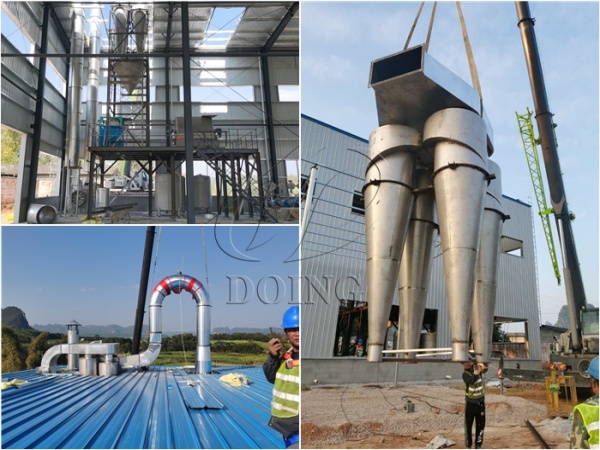
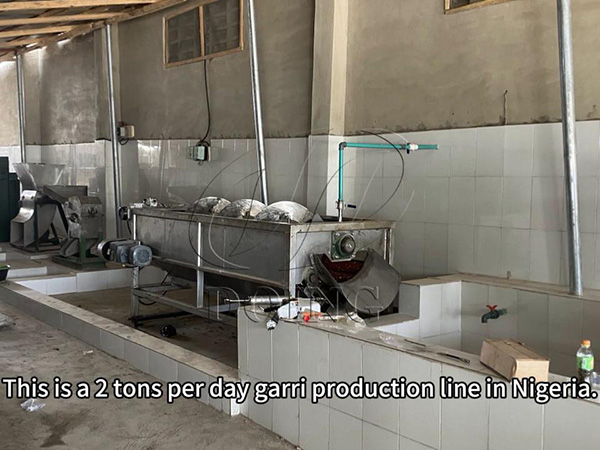
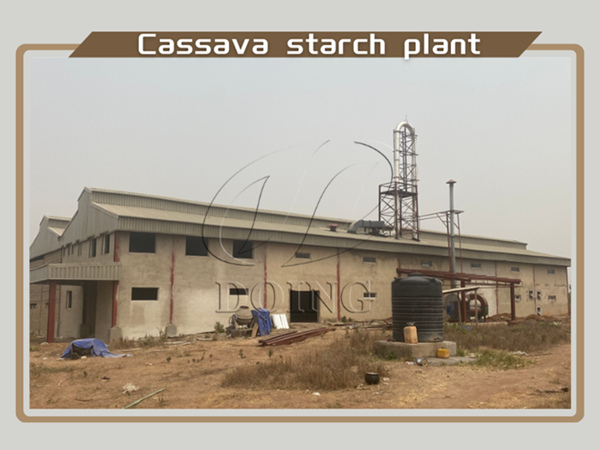
 high-quality garri production project
1. Raw Material Selection and Pretreatment
Cassava Variety: Opt for high-quality cassava varieties free from mold, pests, or diseases to ensure superior starch content and texture.
Thorough Cleaning: After washing, peeling cassava roots rigorously to enhance the final garri’s purity and safety.
2. Fermentation and Dehydration Control on Garri
Precision Fermentation: Monitor fermentation time(often 24 hours) and environmental temperature closely. Over-fermentation may lead to excessive acidity, while under-fermentation risks bland flavor and poor texture
Balanced Dehydration: Combine mechanical pressing (e.g., hydraulic presses) with controlled sun-drying to achieve uniform moisture reduction (typically 8-12% moisture content). This balance prevents spoilage and extends shelf life of garri.
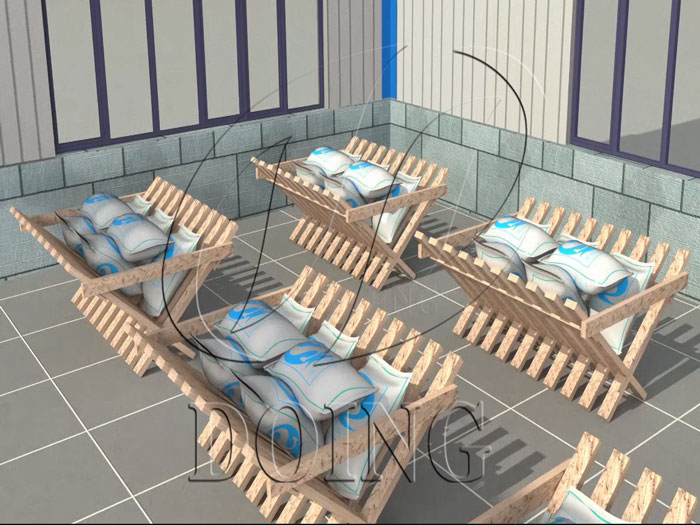 garri fermentation
3. Hygiene and Standardized Operations
Sanitization Protocols: Regularly disinfect garri processing equipment, storage containers, and work spaces to minimize microbial contamination.
Standard Operating Procedures (SOPs): Implement SOPs for peeling, grating, fermenting, and frying to maintain consistency of garri across production batches.
4. Innovative Garri Processing Technologies
Automated Garri Machinery: Replace manual labor with automated cassava garri graters, mechanical pressers, and garri fryers to boost efficiency and reduce human error.
Biotechnological Enhancements: Explore enzyme-assisted fermentation or lactic acid bacteria inoculation to refine flavor profiles and accelerate processing.
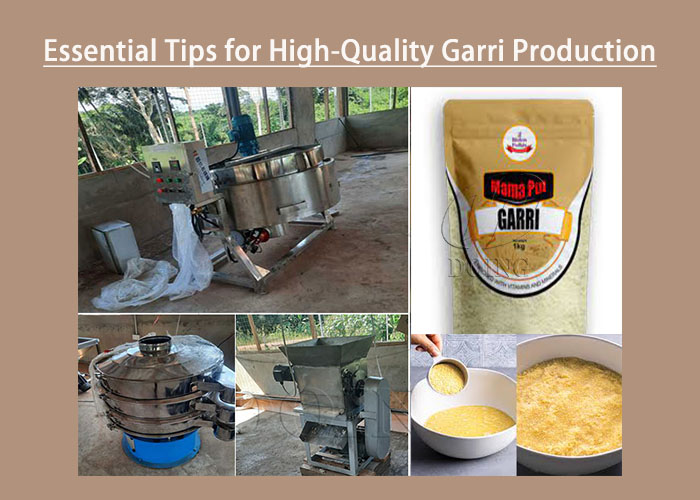
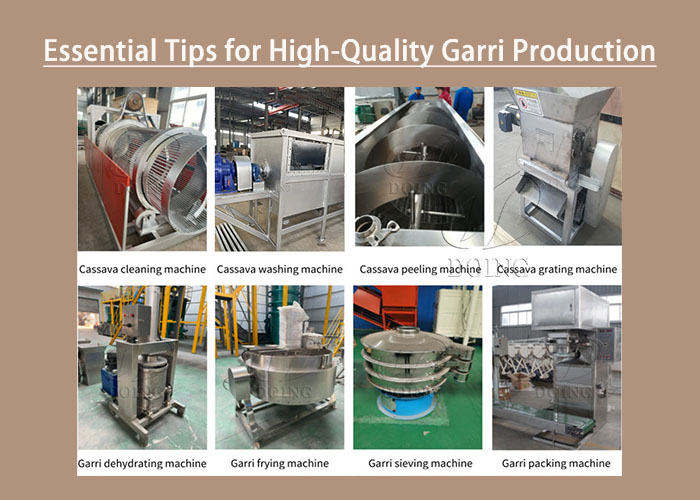 high-quality garri production equipment
5.Packaging and Storage Optimization
Moisture-Resistant Packaging: Use vacuum-sealed or laminated packaging materials to prevent moisture absorption, oxidation, and clumping during storage.
Ideal Storage Conditions: Maintain warehouses at temperatures ≤25°C and relative humidity ≤60% to preserve texture and prevent microbial growth.
Hope these tips can be a driver for your high-quality garri production. Also, if you wanna realize the scale and consist garri production, just chat with us! We, Henan Jinrui, armed with a branch office in Nigeria and equipped with different-capacity garri machinery manufacturing lines, are glad to offer you tailed solutions!
Leave A Message
- Do you want to buy machine?
- Yes, I want to buy machine
- No, I want to learn more in advance.
- What is your raw material?
- Cassava
- Potato
- Sweet potato
- Other:
- What is the final product you want to produce?
- Chips
- Flour
- Starch
- What is the final product you want to produce?
- Garri
- Cassava flour
- Cassava starch
- Cassava chips
- Attiekie
- Bammy
- Other:
- What is your planned capacity for final product?
- <1 ton per day
- 1 ton per day
- 2 tons per day
- 3 tons per day
- 3-10 tons per da
- 10-20 tons per day
- >20 tons per day
- What is the usage of your cassava chips?
- Food usage (like fried chips, flour)
- Industrial usage (like animal feeds, ethanol)
- What is your planned capacity for final product?
- <5 ton per hour
- 5-10 tons per hour
- >10 tons per hour
- What is your planned capacity for final product?
- <500 kg per hour
- 0.5-5 ton per hour
- 5-10 ton per hour
- >10 ton per hour
- What is your planned capacity for final product?
- <300 kg per hour
- 300-1000 kg per hour
- 1-5 ton per hour
- 5-10 ton per hour
- >10 ton per hour